
↓
Operant Conditioning
The 'If You Do This, You Get That' Guide
(For Dogs and Maybe Your Family)
It's not just a fancy term, it's a powerful psychological tool that helps animals (and some humans) associate their actions with their consequences. We're here to guide you in linking your dog's desirable behaviors to positive rewards, like treats, ear scratches, or even a trip to Vegas with a suitcase full of cash. (Remember, every dog is unique, but we're betting on treats.)
The Art of Consequences
(And Why Your Dog Might Be Smarter Than You Think)
Operant conditioning employs both reinforcement and punishment. By mastering this technique, you can teach your dog (or, let's be honest, maybe even your family members) to reliably perform specific tasks. Stay tuned, because this concept might sound complicated, but it's really just 'do this, get that.
THE BASICS
(The 'Do This, Get That' Dictionary):
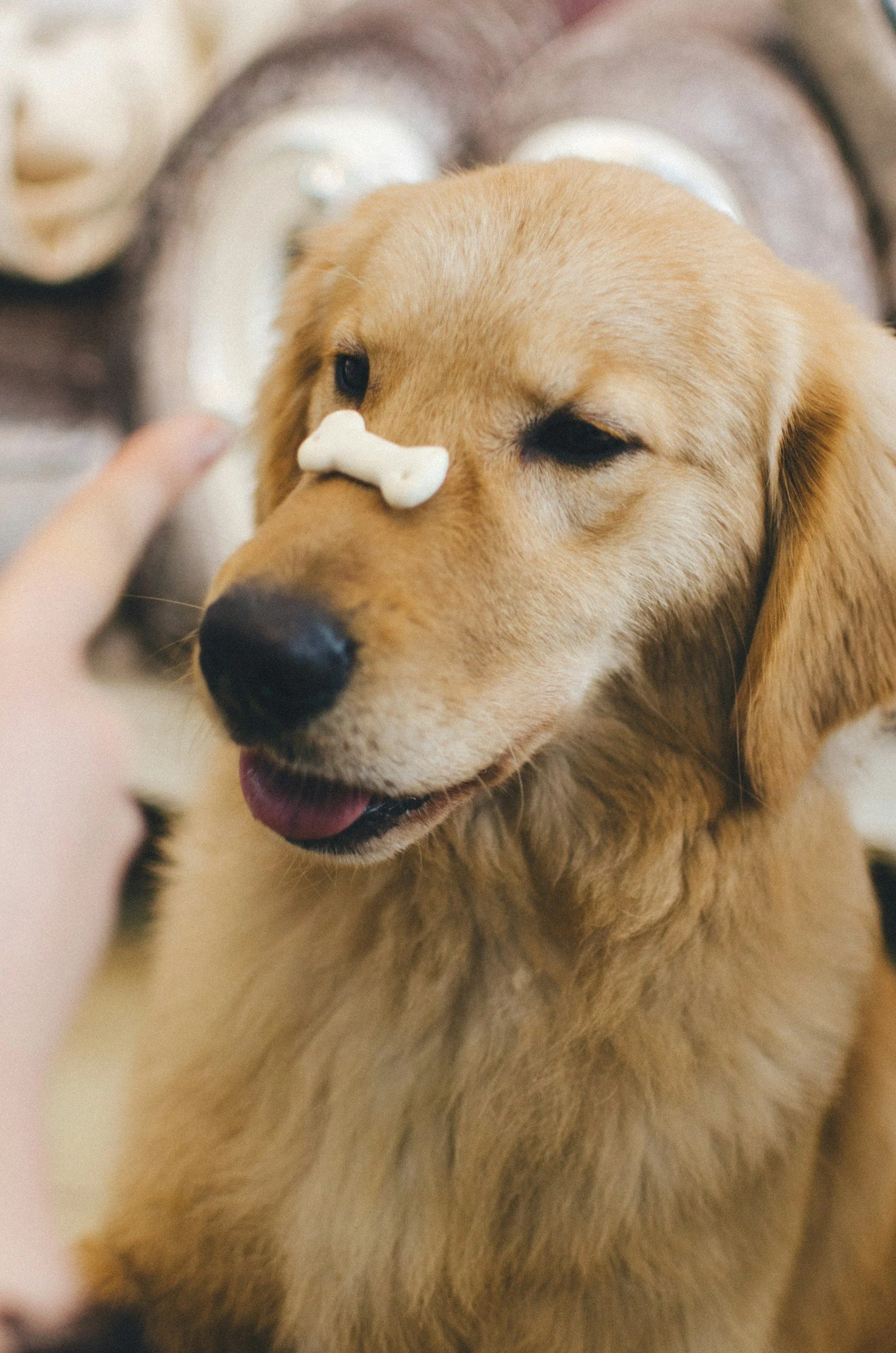
Positive Reinforcement (+R): Adding something good! Like, your dog sits, they get a treat. They're basically saying, 'Hey, I like treats, I'll sit more!' It's like giving them a bonus for good behavior.
Negative Reinforcement (-R): Taking away something bad! Like, your dog pulls on the leash, you pull back, they stop pulling, you release the pressure. They're thinking, 'If I don't pull, the bad feeling goes away!' It's like turning off a really annoying alarm clock.
Positive Punishment (+P): Adding something bad! Like, your dog jumps, you knee them (gently!), they don't like it, they stop jumping. It's like a 'time out' for bad behavior.
Negative Punishment (-P): Taking away something good! Like, your dog jumps, you turn away, they lose your attention. They're thinking, 'If I jump, I lose the fun!' It's like taking away their favorite toy.
A FEW MORE BEHAVIORAL TERMS
(The Fine Print)
Neutral Operants: "These are the 'meh' responses. Nothing changes. Like, your dog stares at the wall. Not good, not bad, just… wall."
Reinforcers and Punishers: The Good and the Not-So-Good: "Reinforcers make behaviors happen more, punishers make them happen less. But remember, what's good for one dog might be bad for another. Like, some dogs hate head pats, so that's a punisher, not a reinforcer."
Examples
Everyday Clicks: Making the Connection
-
The Master of the 'Sad Eyes':
Your dog has perfected the art of the 'sad eyes' when you're eating something delicious. They've learned that this specific combination of a slightly droopy face, a soft whine, and unwavering eye contact often results in you caving and sharing a bite (positive reinforcement for their 'sad eyes' behavior). They've essentially trained you to be a treat-dispensing machine based on their Oscar-worthy performance of puppy-dog sorrow.
-
The Joyful Jumper:
Every time you come home, your dog leaps excitedly, sometimes planting muddy paws on your clean clothes. You react by giving them a hug and enthusiastic greeting (positive reinforcement for their jumping behavior, even if you secretly wish they'd keep all four paws on the floor). They've learned that enthusiastic jumping equals immediate human affection, making your dry cleaner their unwitting accomplice.
-
The Duality of Reinforcement:
You're teaching leash manners. When your dog walks nicely beside you, you give a treat and praise ('Good boy!', positive reinforcement). If they pull ahead to chase a squirrel, you give a quick leash correction (negative reinforcement, the leash pressure stops when they ease up). In one walk, you're using both rewards for good behavior and a mild correction to discourage pulling. It's about being effective, not just 'nice' or 'mean.'
The TL;DR of Operant Conditioning
Operant conditioning is how dogs learn that their actions have consequences. Good actions get rewards, bad actions… well, they don't. By understanding this, you can train your dog to be a well-behaved companion. And remember, consistency is key. (And treats. Lots of treats.)